Self-Mastery
Alchemy at the Bar: Recipes, Ritual, and Honest Restraint
Keep the craft and the ritual; price the rest accurately
6 min read
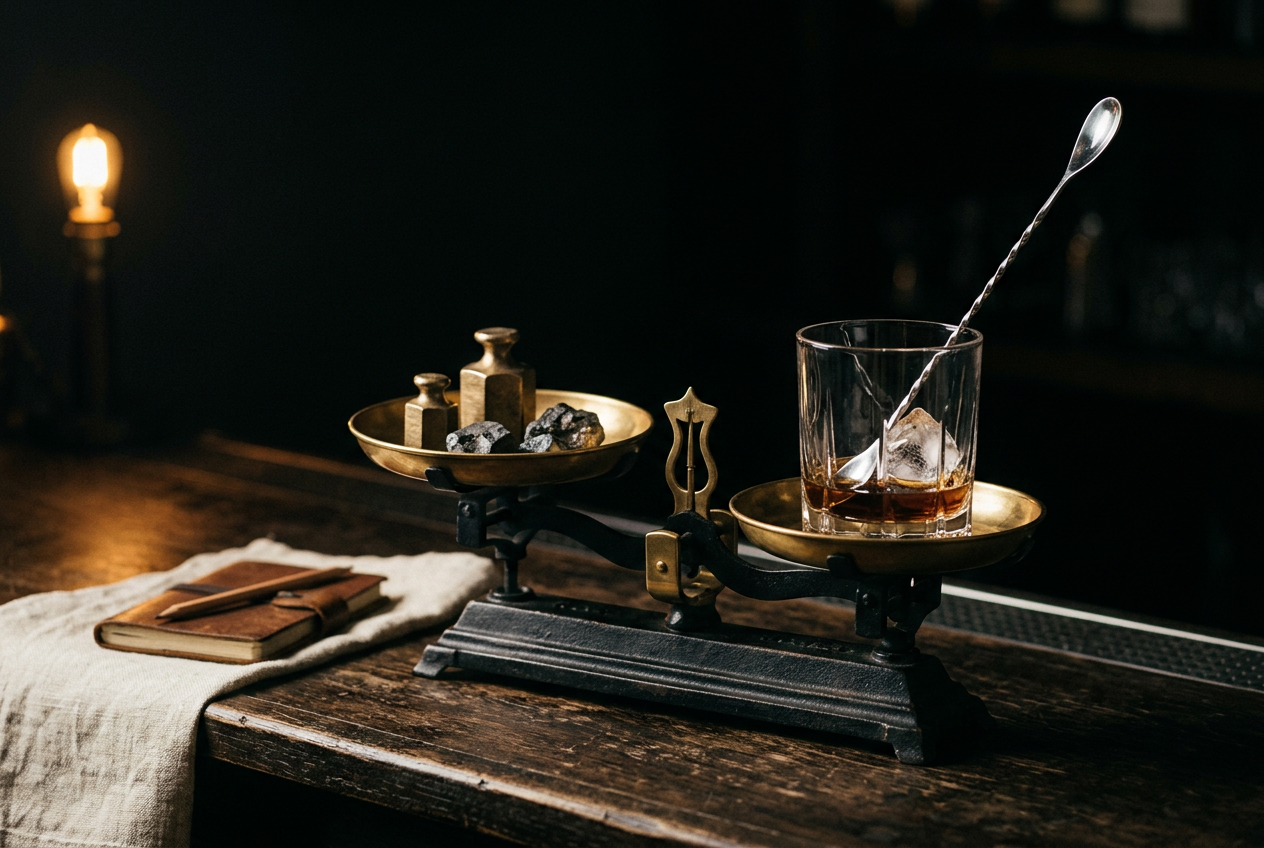
Cocktail bars have adopted the language of alchemy — labs, elixirs, transmutation, the bartender as practitioner — and the borrowing is fair. Mixology is a genuine craft of measured transformation: precise ratios, temperature, dilution, and technique turning a handful of ingredients into something none of them resembled. It is also, honestly, a place where a lot of people's plans quietly go to die. Both of those things are worth talking about at once.
The craft part is real
Good bartending is closer to engineering than to intuition. The classic templates are specifications:
- Sour family — roughly 2 parts spirit, 1 part citrus, ¾ part sweetener. Every daiquiri, margarita, and whiskey sour is a variation on it.
- Old fashioned family — spirit, a small amount of sugar, bitters, dilution from ice.
- Manhattan and martini family — spirit plus fortified wine, stirred, no citrus.
Once you see the templates, hundreds of drinks stop being separate recipes and become substitutions within a known ratio. That is the same efficiency you get in cooking, in writing, in code: learn the underlying structure and the individual cases get cheap.
Two technique facts do most of the work. Shake anything with citrus, dairy, or egg — you need aeration and rapid chilling. Stir anything that is only spirits — clarity and texture matter and aeration ruins them. And ice is an ingredient, not a container: it is where your dilution comes from, which is why a drink made with small, wet ice tastes watery within minutes.
What a bar teaches about ritual
The reason bars feel the way they do is not the alcohol. It is that everything is deliberate: a specific chair, a specific glass, a small performance, undivided attention, and a clear boundary around the time.
You can have all of that without the drink, and most people would benefit from having it more often. The components are simple and transferable:
- A specific vessel. One glass, one mug, used for one purpose.
- A sequence. The same small set of actions, in the same order.
- A boundary. A start and a clear end. Rituals that do not end are just habits with better lighting.
- Attention. No screen. Two minutes of not being reachable is the actual product.
Build that around tea, coffee, soda water with citrus and bitters, or nothing at all, and you keep the part of the evening that was doing you good.
The part the aesthetic hides
If we are being honest about transformation, we have to be honest about the most common obstacle to it. Alcohol is a depressant with well-documented effects that run against nearly everything a personal-growth practice is trying to build.
- It degrades sleep architecture. You may fall asleep faster and you get less deep and REM sleep. Recovery, mood regulation, and memory all pay for that the next day.
- It raises next-day anxiety. The rebound as it clears is physiological, not a character flaw, and it is frequently the thing people are then drinking to manage.
- It is not neutral for health at any amount, according to the current consensus among major health bodies. Fewer drinks is better than more; less often is better than routinely.
- It removes exactly the capacity you are training. The whole point of self-mastery work is the gap between impulse and action. Alcohol closes that gap by design.
None of that requires you to abstain, and this is not a temperance argument. It is a request to price it accurately — the same way you would price any other cost in an honest exchange. If you decide the trade is worth it on a given night, that is a decision. What ruins people is not the decision; it is the default they never examined.
A restraint protocol that is not white-knuckling
If you want less without making it a monthly moral crisis, decide the rules while sober and let the rules do the work.
- Choose the nights in advance. Two specified evenings a week beats "trying to cut back," because it is checkable.
- Choose the number in advance. Not a feeling — a count, decided before the first one.
- Pick one default alternative and keep it good. Soda, lime, bitters in a real glass. The ritual survives; the depressant does not.
- Eat first, and drink water between. Both slow the curve and reduce the next-day rebound.
- Never use it as a tool. The moment it is the way you handle stress, sleep, or a conversation, the cost has changed and the count needs revisiting.
- Watch the honest signals. Drinking alone, hiding the amount, needing more for the same effect, or morning anxiety are all reasons to talk to a doctor rather than to adjust a rule. Dependence is a medical matter, not a discipline problem, and stopping heavy long-term use abruptly can be dangerous without supervision.
Why this belongs in a conversation about power
Because the language of transformation is easy to enjoy and hard to apply, and the gap between them is usually made of small unexamined defaults. The bar is a perfect illustration: a place built on real craft and real ritual, wrapped around a substance that quietly undoes the thing the craft is being used to celebrate.
Keep the craft. Keep the ritual. Price the rest honestly, and decide it while you are clear-headed.
Frequently Asked Questions
What are the basic cocktail ratios?
Most drinks follow a few templates: sours use about 2 parts spirit to 1 part citrus and ¾ part sweetener; old fashioneds use spirit with a small amount of sugar, bitters, and dilution from ice; manhattans and martinis combine spirit with fortified wine and are stirred.
When should a drink be shaken versus stirred?
Shake anything containing citrus, dairy, or egg, because it needs aeration and fast chilling. Stir all-spirit drinks, where clarity and texture matter and aeration would spoil them.
How does alcohol affect sleep?
It shortens the time to fall asleep but reduces deep and REM sleep, so recovery, memory, and mood regulation suffer the following day. Next-day anxiety during the rebound is a common physiological effect.
How can I drink less without giving up the ritual?
Decide the nights and the number in advance while sober, keep one good non-alcoholic default in a proper glass, eat first and drink water between. If you notice hiding the amount, rising tolerance, or morning anxiety, speak to a doctor rather than adjusting rules on your own.