Habits
How to Change a Habit That Is Stuck Using the Swap Method
Stop fighting your willpower and use your brain's natural reward loop to break stubborn behaviors.
8 min read
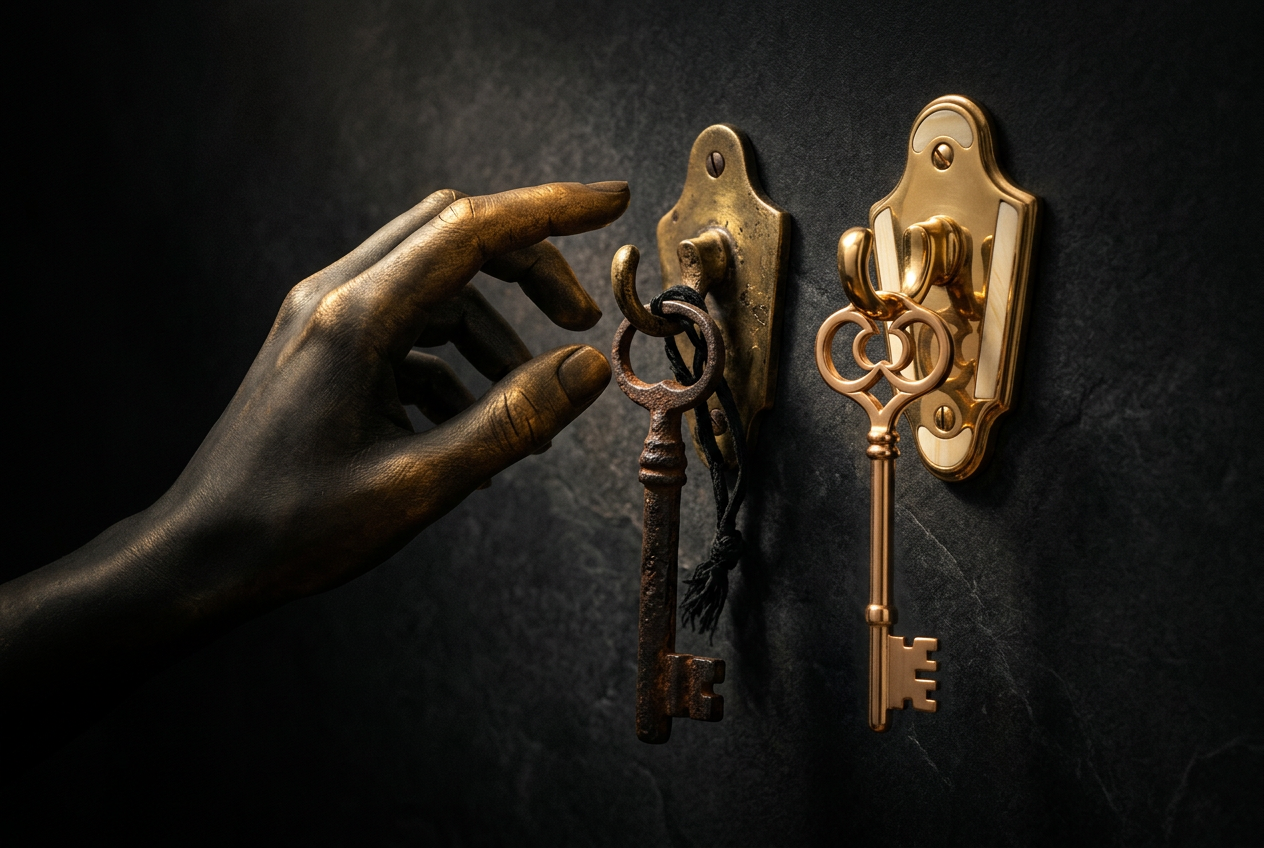
To change a habit that feels completely stuck, you must stop trying to break it with sheer willpower. Habits form through a three-part loop: a cue (the trigger), a routine (the behavior), and a reward (the payoff). Once this loop is wired into your brain, you cannot simply erase it. Instead, the secret to changing a stuck habit is the Swap Method: you keep the exact same cue and the exact same reward, but you change the routine in the middle. By replacing the unwanted behavior with a healthier action that delivers the same underlying satisfaction, you can rewire your brain without fighting your natural wiring.
Most of us treat our habits as moral failures. We believe that if we just had more discipline, we would stop overspending, procrastinating, or scrolling on our phones late into the night. But your brain does not run on morality; it runs on efficiency. When you understand the basic mechanics of how habits form and how they stick, you can stop fighting yourself and start working with your biology.
The Anatomy of a Habit: The Three-Part Loop
At the core of every single automatic behavior is a simple neurological loop. Discovered by researchers and popularized by modern psychology, this loop consists of three distinct phases:
- The Cue: This is the trigger that tells your brain to go into automatic mode. A cue can be almost anything: a specific time of day, an emotional state, a physical location, the presence of certain people, or an immediately preceding action.
- The Routine: This is the physical, mental, or emotional behavior that you perform. It is the actual habit you want to change.
- The Reward: This is the payoff. It is the reason your brain decided to remember this loop in the first place. The reward satisfies a craving, whether that craving is for a hit of dopamine, physical comfort, social connection, or temporary stress relief.
If you try to cut out the routine without addressing the cue and the reward, your brain will experience a state of deprivation. The craving will build until your willpower eventually snaps. This is why standard resolutions so often fail. You cannot simply build a wall of mental resistance and expect it to hold forever.
Why We Get Stuck: The Power of the Craving
When a habit loop is repeated often enough, the cue and the reward become tightly linked in your subconscious mind. Eventually, a physical craving emerges. The moment your brain perceives the cue, it anticipates the reward before you even start the routine. This anticipation is what makes a habit feel automatic and nearly impossible to resist.
Your brain is constantly trying to save energy. Processing decisions requires a massive amount of glucose and mental bandwidth. By turning daily activities into automatic habits, your brain frees up resources for more complex problems. This is why you can drive home from work without consciously remembering every turn or brake tap.
However, your brain does not distinguish between helpful habits and harmful ones. It only cares that a specific routine successfully delivered a reward in the past. If eating a sugary snack when you are stressed makes you feel comforted for five minutes, your brain notes that as a successful loop. The next time you feel stressed, the craving for comfort fires, and your hand reaches for the pantry before you have even consciously processed the emotion.
The Golden Rule of Habit Change: The Swap Method
Because habit loops are physically wired into your neural pathways, you can rarely delete them entirely. Instead, you must remodel them. This is known as the Golden Rule of Habit Change: to change an old habit, you must keep the old cue, deliver the old reward, but insert a new routine.
"Real habit change is not about fighting your brain's natural wiring; it is about working with it to redirect the energy."
If you want to stop drinking soda at 3:00 PM every day, you need to identify why you are doing it. Is it the sugar rush? The physical break from your desk? The social interaction of going to the breakroom? If the real reward is a mental break and a chat with a coworker, drinking a plain glass of water at your desk will not satisfy the loop. You will feel restless and miserable. But if you walk to the breakroom and chat with a coworker while drinking a sparkling water instead, you satisfy the cue and the reward while successfully swapping the routine.
Why We Cling to Bad Habits (Even When They Hurt)
It can be incredibly frustrating to watch yourself repeat behaviors that actively hold you back. You might wonder why you continue to procrastinate on important projects, overspend when you want to save, or stay in patterns that drain your energy.
Often, we tolerate negative loops because they offer a predictable outcome. In human psychology, certainty is a powerful currency. We would frequently rather deal with a familiar problem than step into the vulnerability of an unknown solution. To understand why your mind seeks out these repetitive, painful patterns, it is helpful to look at how we process Familiar Pain: Why We Choose Predictable Problems Over the Unknown. When you realize that your stuck habit is actually an attempt to keep you safe in a predictable environment, you can begin to treat yourself with the compassion needed to change.
Setting Up Your Environment for Frictionless Success
Willpower is a finite resource. If you rely solely on your mental strength to keep you from falling into old routines, you will eventually fail on a day when you are tired, hungry, or stressed. To give your new routine a fighting chance, you must change your physical and digital environments to make the desired behavior the easiest path.
This concept is called friction. You want to add friction to your bad habits and remove friction from your good habits. If you want to stop scrolling on your phone in bed, plug your charger in across the room. If you want to work out in the morning, lay your clothes and shoes out the night before.
By systematically designing your space, you reduce the number of micro-decisions you have to make throughout the day. To learn practical strategies for arranging your physical surroundings to support your goals, read our guide on Environment Design: How to Make the Right Behavior the Easy One.
Step-by-Step: How to Swap Your Stuck Habit
Let’s look at a concrete everyday example. Imagine you have a habit of mindlessly scrolling on your phone for two hours as soon as you sit on the couch after a long workday.
- The Cue: Stepping through the front door, feeling physically exhausted and mentally drained.
- The Routine: Flopping onto the couch, pulling out your phone, and opening social media apps.
- The Reward: Mental distraction, a release of tension, and temporary relaxation.
To swap this habit, use the following actionable steps:
- Identify the Cue with Precision: Pay close attention to the exact moment you feel the urge to start your unwanted routine. Is it triggered by an emotion (stress), a location (the couch), or a specific time (5:30 PM)?
- Isolate the Actual Reward: Ask yourself what the old routine actually does for you. In this case, it isn't about the social media content; it is about zoning out and escaping the stress of the day.
- Select a New, Low-Friction Routine: Choose a replacement behavior that offers the exact same reward (mental distraction and relaxation) but aligns with your values. For example, you might decide to put your phone on the kitchen counter, lay on the couch, and listen to a ten-minute fiction audiobook or an engaging podcast.
- Commit to a Micro-Trial: Do not try to commit to this swap forever. Tell yourself you are going to try this new routine for just five days. This lowers the psychological pressure and allows you to experiment without fear of failure.
By maintaining the transition period your brain craves (sitting on the couch to decompress) but changing the medium of distraction (audio instead of endless visual scrolling), you satisfy the brain's loop without draining your mental battery.
Shifting Your Identity to Match Your New Habits
True behavioral change is not just about what you do; it is about who you believe you are. If you try to change your habits while maintaining an identity that conflicts with those habits, you will constantly experience internal friction. For instance, if you believe you are "a lazy person who struggles with discipline," your brain will naturally try to align your actions with that self-image.
As outlined in The Alchemized Principles of Power, true transformation is not about destroying who you are, but about redirecting the natural patterns of your energy. You must begin to view your habits as votes for the type of person you wish to become. Every time you perform a positive swap, you are casting a vote for a new identity.
If you find it difficult to picture yourself as someone who easily maintains healthy habits, you are not alone. It takes time to rebuild your internal narrative. For practical advice on bridging this mental gap, explore our article on How to Change Your Self-Concept When You Do Not Believe It Yet. Over time, as your physical actions change, your beliefs about your own capabilities will naturally catch up.
Frequently Asked Questions
How long does it actually take to form a new habit or change an old one?
While many people believe the myth that it takes exactly 21 days to form a habit, behavioral science shows that it actually takes anywhere from 18 to 254 days, depending on the complexity of the behavior. On average, it takes about 66 days for a new behavior to become completely automatic. The key is consistency over perfection; missing a single day does not ruin your progress.
What should I do if I slip up and return to my old, stuck habit?
Expect slip-ups as a normal part of the learning process rather than a sign of failure. When you return to an old routine, do not beat yourself up; instead, act like a scientist and analyze what triggered the relapse. Look at what cue bypassed your awareness and use that data to refine your environment or adjust your replacement routine for next time.
Can I try to change multiple habits at the exact same time?
It is highly recommended that you focus on changing only one habit at a time. Because habits require conscious effort and decision-making during the transition phase, trying to change multiple behaviors at once quickly depletes your willpower reserves. Once your first new routine becomes automatic and no longer requires conscious effort, you can safely move on to the next one.
Why does my brain crave bad habits even when I consciously want to stop?
Your brain does not understand "good" or "bad" in a moral sense; it only understands immediate relief and energy conservation. If an unhealthy habit provides a fast, reliable reward—such as comfort, distraction, or pleasure—your brain will continue to crave it because it is wired to seek immediate gratification over long-term benefits.


