Alchemy
Alchemy in Anime: Equivalent Exchange as a Rule for Real Life
Pricing what you want before you commit to it
6 min read
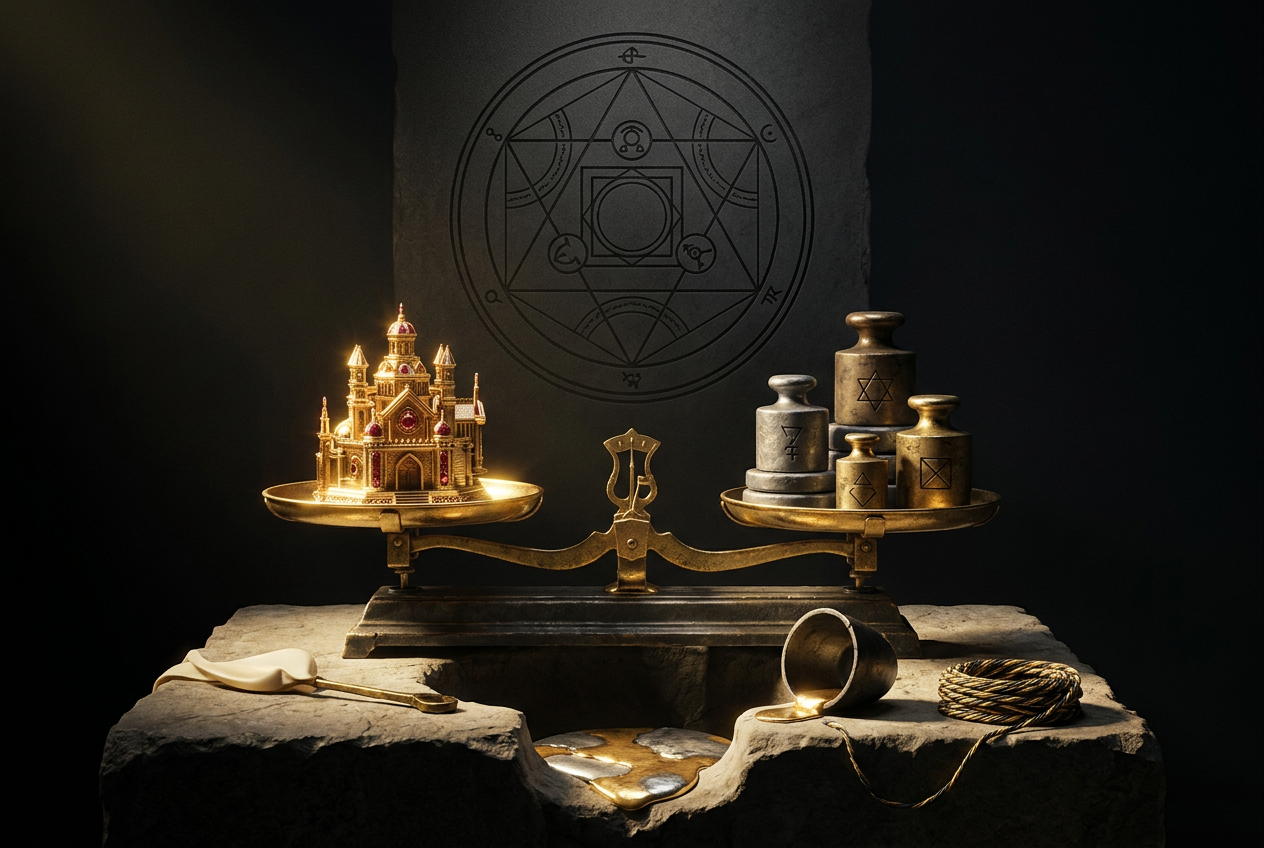
Alchemy has been a central engine of anime storytelling for decades, and one series set the terms: Fullmetal Alchemist, built around the Law of Equivalent Exchange. "Humankind cannot gain anything without first giving something in return. To obtain, something of equal value must be lost." Viewers looking for alchemy anime usually find that line first, and it stays with them longer than the plot does — because unlike most fictional magic systems, it describes something true.
Why the Law of Equivalent Exchange lands so hard
Most fantasy gives characters power with no honest ledger. Alchemy in Fullmetal has a ledger, and the story is largely about characters trying to cheat it and paying for it.
That is a more accurate picture of adult life than nearly anything else in the genre. Every real gain has a cost attached, and the cost is usually paid in a currency people do not count:
- The promotion costs evenings.
- The savings cost the trip you did not take.
- The strong body costs mornings you would rather have slept through.
- The honest relationship costs the version of yourself you were performing.
Nothing here is punishment. It is arithmetic. The unhappiest people are not the ones who paid a price; they are the ones who paid a price they never chose, for something they never named.
Human transmutation and the cost of denial
The taboo in the series is human transmutation — trying to reverse a loss that cannot be reversed. The characters attempt it out of grief, and it costs them limbs, bodies, years.
The everyday version is trying to undo something instead of building forward from it. Reworking the same argument for a decade. Trying to become the person you were before the illness, the layoff, the divorce. Spending your thirties auditioning for the approval of someone who was never going to give it.
The honest move is harder and cheaper: accept the loss as final and ask what can be made from what remains. That is the difference between grief that metabolizes and grief that ossifies.
The three-question cost audit
Fiction dramatizes the price. Real life hides it. This is a way to make it visible before you commit.
1. What am I actually paying? Write the cost in units, not adjectives. Not "it'll be hard" — eleven hours a week, four thousand dollars, two years of not moving. Vague costs are always underestimated.
2. Who else pays? Almost every ambition draws on people who did not choose it. Naming them turns silent resentment into an explicit agreement. This one conversation saves more relationships than any amount of good intention.
3. Is the exchange rate acceptable to me, in writing? If you would not sign the trade, you will abandon it in month four and blame your discipline. Better to find that out now.
Do this once for a real decision and you will notice how many of your past commitments failed because nobody ever priced them.
What the alchemists in the story get right about practice
Beyond the philosophy, the series shows craft: circles drawn precisely, materials understood, results predicted. Alchemy in that world is not wishing. It is knowledge applied under pressure.
Three habits transfer directly.
Understand your materials. Characters must know the composition of what they are transmuting. Your materials are your energy patterns, your finances, your actual available hours, and your temperament. Most plans fail because they were designed for a person with different raw material.
Draw the circle before you act. Preparation is the visible part of skill. The circle is your calendar, your checklist, your rehearsal, your saved emergency money. Preparation is what makes performance boring, and boring is the goal.
Expect the rebound. In the story, a flawed circle produces a violent backfire. In life, an overreaching plan produces a crash — the fourteen-hour day that costs the next three. Build for the rebound and you will not need heroics.
The line that matters more than the law
Late in the series, the law itself gets questioned: the world is not a closed ledger, and something does come from the effort of many people together. That amendment is important.
Exchange explains the cost of individual gain. It does not explain compounding, teaching, community, or the fact that a skill you spend nothing extra to share can change someone's decade. Some things genuinely multiply rather than trade.
Practically: pay honestly for what you want, and put your energy where it compounds. Skills compound. Relationships compound. Health compounds. Reputation compounds. Purchases and arguments do not.
Frequently Asked Questions
What is the Law of Equivalent Exchange in alchemy anime?
It is the central rule of Fullmetal Alchemist: nothing can be gained without giving something of equal value. It frames transformation as an honest trade rather than free magic, which is why viewers apply it to real decisions.
Is equivalent exchange true in real life?
As a way of pricing effort, largely yes — every gain costs time, money, attention, or comfort. But it is incomplete, because some investments compound rather than trade evenly, particularly skills, health, and relationships.
How do I decide whether something is worth the cost?
Write the cost in concrete units, identify who else pays it, and confirm you would sign that trade in writing. Commitments abandoned halfway are usually commitments that were never priced.
Why do stories about alchemy stay popular?
Because alchemy is the clearest available metaphor for transformation with a cost. Audiences recognize the ledger from their own lives, which makes fictional alchemy feel less like fantasy and more like a description of adulthood.