Mindset
Aroma Alchemy: Scent Anchors for Focus, Calm, and Recall
What scent can genuinely do, and what it cannot
6 min read
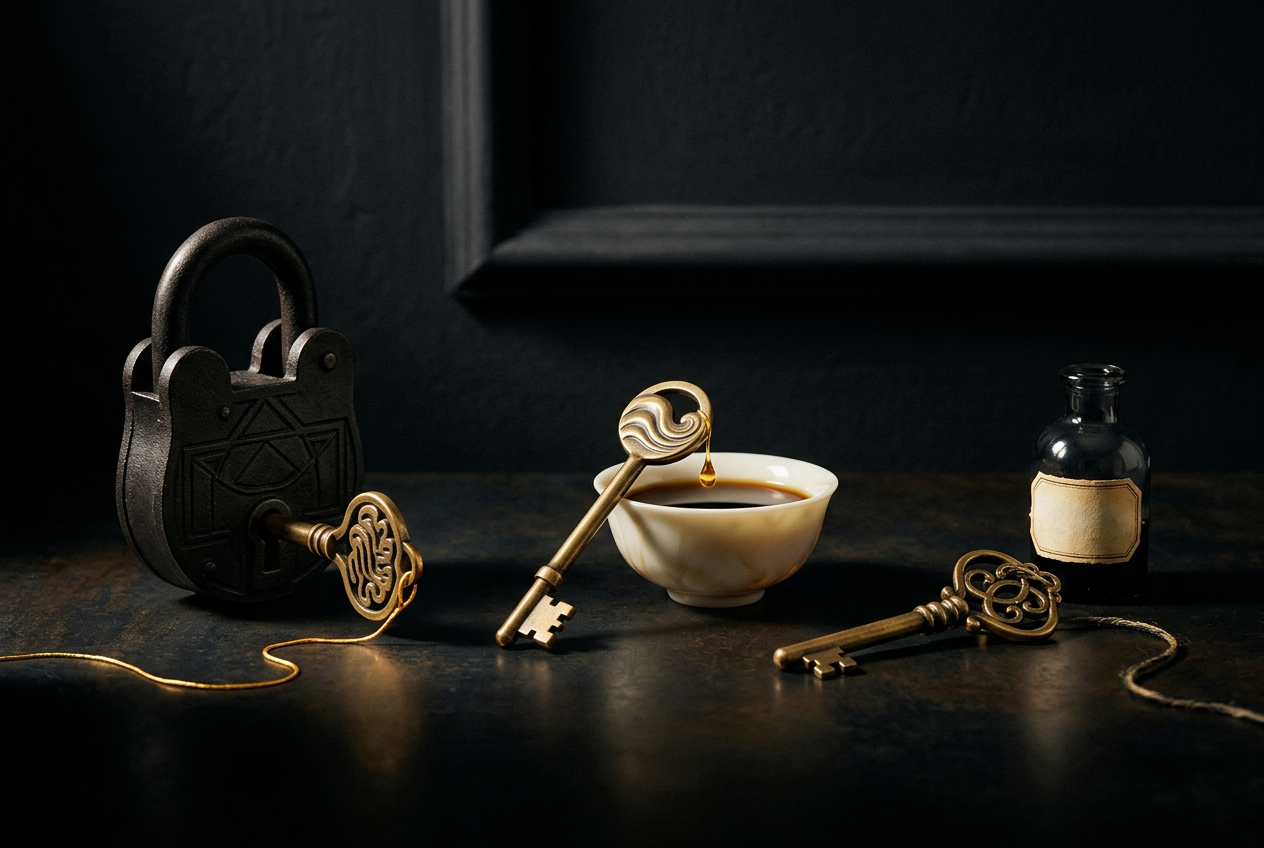
Scent has the shortest route to memory of any sense. Olfactory signals reach the areas involved in emotion and memory with far less relay than sight or sound, which is why a smell can return you to a specific kitchen from thirty years ago with a completeness no photograph achieves. "Aroma alchemy" gets used to sell products; the underlying mechanism is free, and you can use it to change how quickly you focus, calm down, and fall asleep.
This is not aromatherapy as medicine. Scent does not cure anything. What it does reliably is act as a cue — and cues are how states get triggered on purpose rather than by chance.
What scent can and cannot do
Worth separating clearly, because the category is full of overstatement.
Reasonably supported: scent is an unusually strong retrieval cue for memory and emotional state; pleasant ambient scent modestly improves mood; certain smells increase alertness through mild stimulation; scent paired repeatedly with a routine becomes a conditioned signal for that routine.
Not supported: scent treating illness, replacing medication, "detoxifying," or producing specific physiological outcomes through the skin. Anything sold on those claims is being sold dishonestly.
The honest version is still valuable. A cue that reliably starts a behavior is worth more than most productivity systems, because the failure point in almost every routine is beginning.
Build one anchor, properly
An anchor is a scent used for exactly one purpose until the association is solid. The most common mistake is using a favorite smell everywhere, which trains it to mean nothing.
- Pick a scent you do not encounter elsewhere. Distinctive matters more than pleasant. If it is your shampoo, it is unusable.
- Assign it one job. Focus, wind-down, or training. Not two.
- Deliver it the same way each time. One drop on a stone or a tissue, a specific candle, a roller on the wrist. Consistency of delivery is part of the cue.
- Pair it tightly with the behavior. Scent, then begin within a minute. Every time, for two to three weeks.
- Withdraw it from the rest of your life. No candle in the living room, no wearing it out.
- Then test it. Use it in a different room and notice whether the state arrives. If it does, you have an anchor you can carry.
Reasonable starting points: something bright and sharp — citrus, peppermint, eucalyptus — for focus; something warm and low — cedar, lavender, vetiver, chamomile — for wind-down. Personal preference beats any list, because a smell you dislike will not survive three weeks of use.
Where anchors are most useful
Starting work. The hardest ten seconds of a work session is the first ten. A scent cue plus a fixed opening action removes the negotiation.
Sleep. Scent slots naturally into a wind-down sequence — same order, same room, same fifteen minutes. Its job is not sedation; it is telling your system which part of the day this is.
Recovering after conflict. A calming anchor paired with slow breathing gives you something concrete to do with your hands and your attention while arousal comes down.
Studying and recall. Studying with one distinctive scent and using the same scent while reviewing can improve retrieval. It is a genuine, low-cost technique.
Travel. One small bottle can make a hotel room feel like your own routine, which is most of what disrupted sleep away from home actually is.
Practical cautions
Essential oils are concentrated plant chemistry, not benign because they are natural.
- Never ingest them without qualified medical guidance.
- Dilute before skin contact; undiluted citrus and cinnamon in particular cause burns and photosensitivity.
- Keep diffusers away from cats and birds, which metabolize several common compounds poorly.
- Ventilate. Continuous diffusing in a closed room can irritate airways, and it also dulls the cue through habituation.
- If someone in the household has asthma or migraines, ask first. A cue that triggers someone else's headache is not worth it.
- Pregnancy, infants, and existing conditions warrant a doctor's input rather than a blog's.
Habituation is the practical limitation: use a scent constantly and you stop noticing it, which is the opposite of what an anchor is for. Deliberate, brief, purposeful use keeps it sharp.
The wider principle
The lever here is not the oil. It is the fact that state can be triggered by design instead of waited for.
Once you see it, you find it everywhere: a specific chair for reading, one playlist for training, clothes that only exist for work, a mug used only for the morning review. None of these are magic. Each one removes a decision from a moment where decisions are expensive.
That is what personal alchemy looks like in practice — not intensity, but arranging the ordinary details of a day so the right state is easier to enter than to avoid.
Frequently Asked Questions
Does aromatherapy actually work?
Scent reliably works as a memory and state cue, and pleasant ambient scent can modestly improve mood and alertness. It does not treat medical conditions, and claims that it does are not supported.
How do I create a scent anchor for focus?
Choose a distinctive scent you do not encounter elsewhere, use it only before focused work, begin working within a minute of using it, and repeat daily for two to three weeks. Then test it in a new setting to confirm the association holds.
Which scents are best for focus and which for sleep?
Bright, sharp scents such as citrus, peppermint, and eucalyptus suit alertness; warm, low scents such as cedar, lavender, vetiver, and chamomile suit wind-down. Personal preference matters most, since a disliked scent will not be used consistently.
Are essential oils safe to use every day?
Used sparingly, diluted, and in a ventilated room, they are generally fine for most adults. Do not ingest them, keep them away from cats and birds, check with a doctor during pregnancy or with respiratory conditions, and avoid constant diffusing — which both irritates airways and dulls the cue.