Mindset
What You Wear Changes How You Perform
Enclothed cognition, uniforms for modes, and carried commitments
6 min read
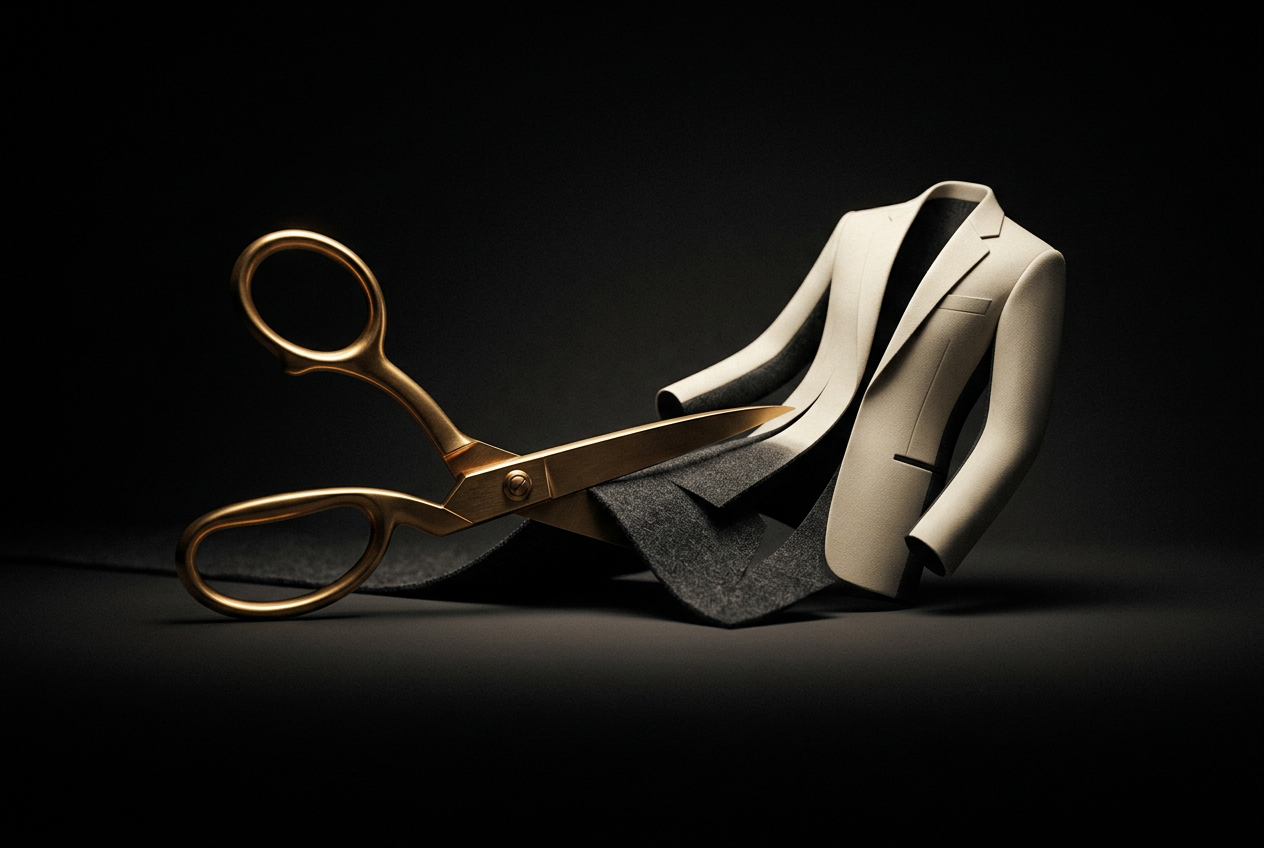
Apparel and adornment brands reach for the word alchemy constantly, and the instinct behind it is sound. Clothing does change something. Not the world's opinion of you first — your own behavior. Researchers call it enclothed cognition: the finding that what you wear influences how you think and act, because clothes carry meanings you have absorbed and then apply to yourself while wearing them.
This is one of the fastest levers available for changing your state, and almost nobody uses it deliberately.
What the research actually shows
The best-known experiments involved a lab coat. Participants who wore one, and understood it as a doctor's coat, performed better on tasks requiring sustained attention than participants wearing the identical garment described as a painter's smock. Same object, different meaning, measurably different behavior.
Two things follow, and both matter.
The meaning does the work, not the fabric. A garment only affects you if it carries an association for you. Someone else's power suit does nothing for you if it means nothing to you.
Effects are modest and specific. Clothing will not substitute for skill or preparation. It shifts how easily you enter a state — which is not nothing, because entering the state is often the hard part.
Treat it as a cue with real but bounded effect, and you will use it well. Treat it as transformation and you will be disappointed by a jacket.
Build a uniform for each mode
The most practical application is to define two or three modes and assign clothing to each. Not outfits — modes.
Work mode. Something you can wear seated for six hours that still reads as deliberate. The requirement is that it is not what you sleep in. Working in sleepwear blurs the boundary that lets you stop working, which is the more expensive problem for most people who work from home.
Training mode. Clean, ready, and located where you will see it. Laying it out the night before removes the single most common excuse.
Recovery mode. Explicitly different from both. Its job is to signal that the day is over. This is what most people are missing, and it is why their evenings feel like an extension of their working hours.
Two rules make this work: each mode is worn only for its purpose, and each has a small number of items so it requires no decision. Decisions are the tax you are trying to avoid.
Adornment as a carried commitment
Jewelry — a ring, a pendant, a cuff, a stone in a pocket — has an advantage clothing does not. It stays on all day and crosses your visual field constantly.
That makes it an unusually good vehicle for a single commitment. The method is short:
- Write one specific, testable sentence: I don't answer messages before the first task is finished.
- Attach it to one object you actually like wearing.
- When you notice the object, ask one question: am I doing the thing? Yes or no, no commentary.
- Review after a month. Keep, raise the bar, or retire the object.
That last step matters more than it sounds. An object attached to a commitment you have quietly abandoned teaches you to ignore your own agreements. Retiring it protects the mechanism.
Getting dressed as a decision-reduction system
The reason some people wear near-identical clothes daily is not aesthetic minimalism. It is that morning judgment is expensive and finite, and clothing is the easiest place to stop spending it.
A workable version:
- Define a default. One combination that always works, in multiples.
- Set a floor, not a ceiling. Nothing stained, nothing broken, nothing that fits the body you had four years ago. A wardrobe that half fits produces a daily small negotiation with your self-image.
- Repair rather than replace where you can. Fixing a good garment costs less than buying a worse one, and it changes how you treat your things.
- Keep one genuinely good set. For interviews, funerals, the meeting that matters. Owning it removes panic from occasions that already have enough of it.
None of this is about appearing wealthy. It is about reducing the number of times per day you have to think about something that does not deserve thought.
What clothing cannot do
It is worth being plain here, because this idea gets oversold.
Dressing well does not make you competent, and it does not fix a self-image problem. If you feel like a fraud in the room, a better jacket will not resolve it — accumulated evidence of doing the work will. Clothing can make the first ten minutes easier. It cannot supply the substance of the next ten years.
There is also a real trap in using purchases as a substitute for practice. Buying the gear is pleasurable and immediate; using it is neither. If the wardrobe for a version of your life keeps arriving before the behavior does, the wardrobe has become the hobby.
Used honestly, though, this is one of the least expensive tools available: define your modes, keep them separate, make the choice automatic, and let the clothes do the small job they are genuinely good at — telling you which part of your life you are currently in.
Frequently Asked Questions
What is enclothed cognition?
It is the research finding that clothing influences how you think and behave, because garments carry symbolic meanings that you apply to yourself while wearing them. The best-known study found improved attention among people wearing a coat described as a doctor's coat versus the same coat described as a painter's smock.
Does what I wear really affect my performance?
It has a real but modest effect, and only when the clothing carries meaning for you. It makes entering a focused or energetic state easier; it does not replace skill or preparation.
Should I get dressed properly to work from home?
Yes, mainly for the boundary. Wearing something distinct from sleepwear and recovery clothes makes it easier both to start work and to stop, which is usually the harder half.
How do I use jewelry as a commitment reminder?
Attach one specific, testable sentence to a single object you wear daily, and use each time you notice it as a yes-or-no check on whether you are keeping it. Review monthly and retire the object if the commitment has lapsed.