Strategy
Why Your Environment Shapes Your Behavior More Than Willpower
Stop relying on sheer discipline. Learn how to audit your spaces to make positive choices your automatic default.
8 min read
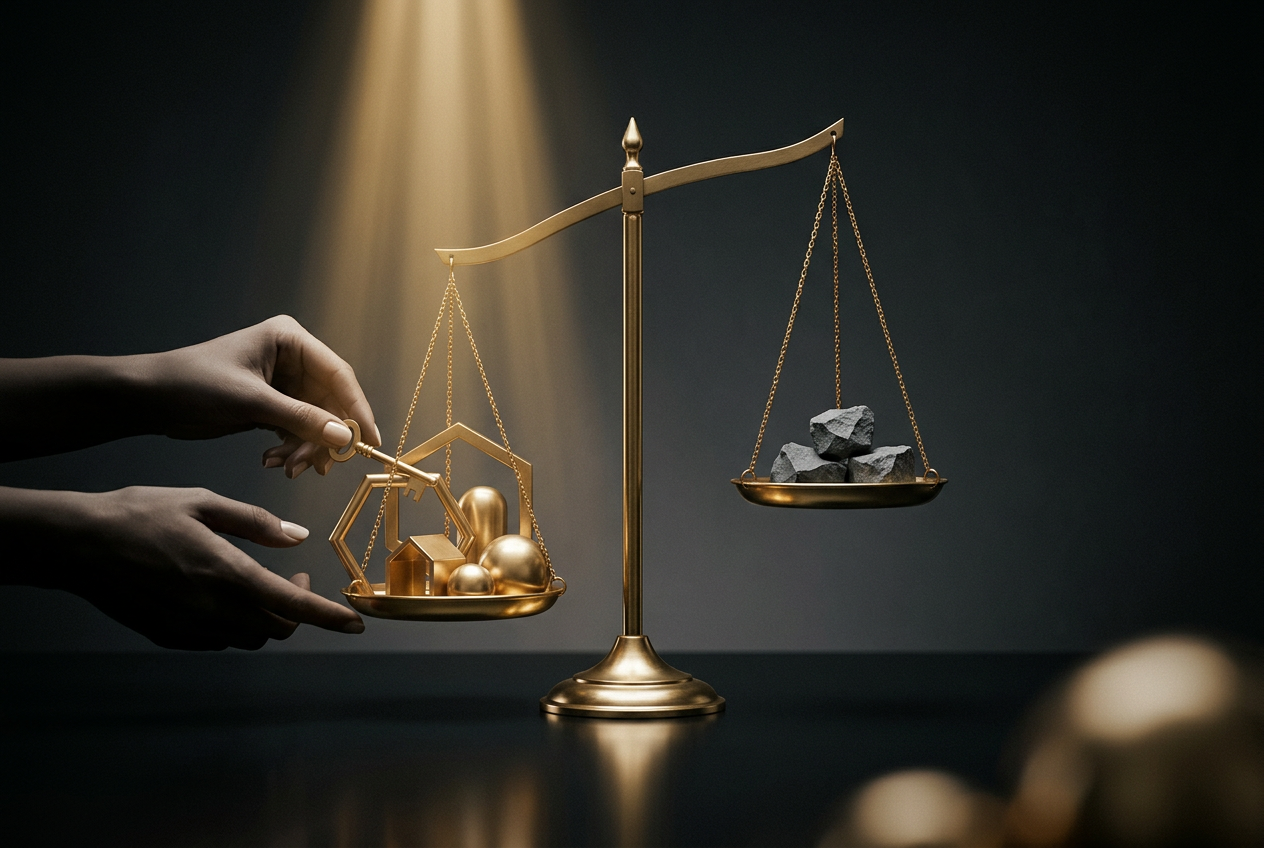
Have you ever wondered why it is so hard to stick to a healthy habit, even when you want it desperately? The truth is that willpower is a finite, unreliable resource, while your physical surroundings are constant. Understanding how your environment shapes your behavior is the actual secret to lasting personal change. Instead of forcing yourself to resist temptation, you can design your spaces so that good choices become easy and bad choices become difficult. When you intentionally alter your physical, social, and digital spaces, you change your default actions without relying on exhausting mental strain.
The Willpower Myth: Why Grit Alone Fails You
We have been taught that self-control is a test of character. If you eat the cookie, skip your workout, or spend hours scrolling on your phone, you might blame yourself for being "weak." But psychology tells a different story. Willpower is like a battery; every decision you make throughout the day drains its charge. By the time you get home from a long, stressful workday, your battery is completely depleted. This state is known as decision fatigue.
When your mental energy is gone, you naturally default to whatever is easiest. If your kitchen counter is covered in junk food, you will eat it. If your television remote control is sitting right next to your couch, you will turn on the screen. This isn't a moral failing; it is how the human brain is wired to conserve energy.
In her book, The Alchemized Principles of Power, Brittany Johnson discusses how real transformation isn't about fighting your natural human tendencies, but working with them. Trying to force yourself to behave through sheer grit is like swimming upstream. Instead of fighting the current, you can change the direction of the river.
The Invisible Force: How Your Environment Shapes Your Behavior
Every habit begins with a cue. Your brain constantly scans your surroundings for signals that trigger specific actions. If you see an object, your mind automatically associates it with a past behavior, initiating an urge before you even realize it.
Let's look closely at how your environment shapes your behavior on a daily basis. When you walk into your living room and see the television, your brain remembers the quick hit of dopamine from watching your favorite show. You do not consciously decide to turn the television on; the cue in your environment triggered the behavior.
If you want to build lasting habits, you must realize that why your environment shapes your behavior goes far deeper than simple room organization. Your space acts as an external nervous system. If your home or office is chaotic, filled with distractions, or structured to make bad choices convenient, your brain will naturally choose those easy paths every single time. To take back control, you must stop treating your environment as passive scenery. Your physical space is an active partner in your daily routine.
Designing for Friction: The Path of Least Resistance
Behavioral design relies on a simple rule: decrease friction for good habits, and increase friction for bad habits. Friction is the amount of physical or mental effort required to take an action.
Imagine you want to practice playing the guitar every evening. If your guitar is packed away in a case, in a closet, behind a pile of storage boxes, the friction is incredibly high. You have to open the closet, move the boxes, open the case, tune the guitar, and find a pick. Because of those minor obstacles, you will likely choose to sit on the couch and scroll your phone instead.
Now, imagine a different setup. Your guitar is resting on a stand in the middle of your living room. A pick is already tucked between the strings. The friction to practice is now near zero. You can pick it up in a single movement. By designing your environment to reduce friction for the things you want to do and raise friction for the things you want to avoid, you automate your decision-making.
The Room-by-Room Environmental Audit
To truly grasp how your environment shapes your behavior, you need to look at your personal spaces with fresh eyes. Walk through your home and evaluate each room not by how it looks, but by what behavior it encourages. Here is how to audit your space room by room.
The Kitchen: Cultivating Better Nutrition
Your kitchen layout dictates your diet far more than your health goals do. If processed snacks are sitting at eye level on your pantry shelves or directly on the kitchen counter, you will grab them when you are hungry and tired. To fix this, put healthy options like fresh fruit or nuts in high-visibility areas. Hide the sweets in a high, hard-to-reach cabinet, or keep them out of your house entirely. When you have to get a step stool just to reach a cookie, you give your conscious mind a moment to catch up and make a better decision.
The Bedroom: Optimizing Rest and Disconnection
Your bedroom should be a sanctuary for sleep and recovery, but for most people, it is an extension of their digital workspace. If you charge your phone on your nightstand, your last action of the night and your first action of the morning will be staring at a screen. To break this loop, buy a simple, inexpensive alarm clock and charge your phone in another room entirely. Keep a book you want to read on your pillow so that when you climb into bed, reading is the easiest option.
The Workspace: Guarding Focus and Flow
A cluttered desk breeds a cluttered mind. If your workspace is covered in old mail, charging cables, and random objects, your brain will seek distraction just to escape the visual noise. Clear everything off your desk except the absolute essentials for your current task. If you want to drink more water, place a full water bottle directly next to your computer screen. If you want to write, open your word processor and put it in full-screen mode before you close your computer the night before.
The Digital Environment: Reclaiming Your Screen Time
We spend hours every day looking at our phones and computers, making our digital environments just as influential as our physical ones. If your social media apps are on your home screen, you will open them unconsciously. Move these apps into folders on the second or third page of your phone, or delete them entirely and only access them via a web browser. Turn off all non-human notifications so your phone only alerts you when a real person is trying to reach you.
Actionable Steps to Redesign Your Space Today
Making these changes does not require a massive renovation. You can start optimizing your environment in less than fifteen minutes with a few simple tweaks. Use this checklist to get started today:
- Hide the triggers: Put your phone charger in a hallway or another room away from your bed.
- Preset your mornings: Set your gym clothes out next to your bed the night before, or prep your coffee maker so all you have to do is press a button.
- Clear your visual horizon: Clear your main workspace of any items that are not relevant to your current project.
- Use visual prompts: Place a book, journal, or tool you want to use in a central spot where you literally have to step over or around it to ignore it.
"You do not rise to the level of your goals. You fall to the level of your systems—and your environment is the bedrock of those systems."
The Social and Mental Space: Reclaiming Your Inner Compass
Your environment is not just made of wood, brick, and screens. It is also made of the voices you listen to and the energy of the people you keep close. If you surround yourself with people who complain constantly or indulge in destructive habits, you will slowly adopt those same patterns. On the other hand, spending time with people who prioritize personal growth and strategic thinking makes those traits feel normal and effortless.
As you embark on your journey of self mastery for beginners, managing your social environment becomes vital. You must protect your mental energy from negative influences and constant noise. When you learn how to protect your attention, you reclaim the mental clarity needed to make strategic choices instead of reacting to every external demand. By deliberately curating who you spend time with and what information you consume, you build a protective barrier around your mind. Your external environment supports your internal growth, making transformation feel like a natural evolution rather than an exhausting uphill battle.
Frequently Asked Questions
How long does it take to see behavior changes after changing my environment?
You will often notice a change in your behavior almost immediately. Because environmental design removes the physical cues that trigger bad habits, you stop reacting to those cues right away. Long-term habit formation still takes time, but the friction of starting is instantly reduced.
What if I cannot control my entire environment, like sharing a home or office?
Focus entirely on the micro-environments that you do control. This could be your specific desk, your side of the bedroom, or even your digital home screen. You can also use physical boundaries, like noise-canceling headphones or a specific desk lamp, to signal to your brain that it is time to focus.
Is willpower completely useless for building habits?
No, willpower is useful for short-term efforts and initiating change. It is the spark that helps you make the decision to redesign your environment in the first place. However, willpower is a terrible strategy for long-term maintenance, which is why your physical surroundings must take over once the initial motivation fades.
How do I know if my environment is working against me?
Pay attention to where you feel the most friction or frustration in your daily routine. If you consistently fail to do something you want to do, stop blaming your lack of discipline. Look closely at the physical path leading up to that habit and find the obstacle that is getting in your way.
The principle behind this
How Your Environment Quietly Shapes Your IdentityIdentity is not only chosen; it is absorbed. Physical space, information, relationships, routines, and cues teach you who you are through repetition.