Alchemy
What Alchemy Symbols Actually Mean (and How to Use Them)
Go beyond the moody art trend and discover how historical alchemical symbols serve as a practical map for psychological growth.
8 min read
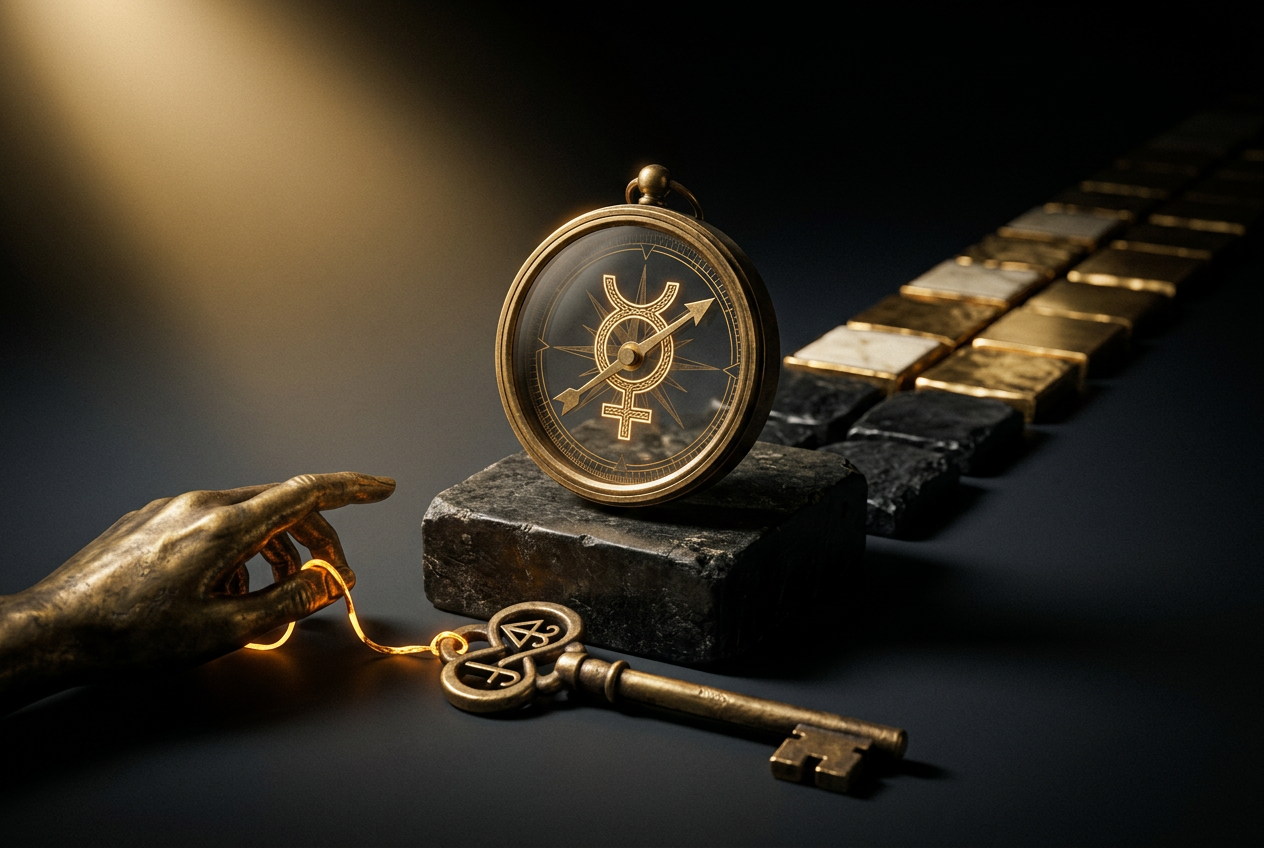
If you have ever scrolled through social media, browsed design boards, or visited a trendy bookstore, you have likely run into alchemy aesthetics. This popular style features deep colors, celestial diagrams, geometric triangles, and stylized suns and moons. But alchemy art is far more than a moody design trend. Historically, these symbols were a visual code used by early thinkers to map out psychological transformation. Instead of turning physical lead into gold, modern mental alchemy uses these symbols as a blueprint for converting raw, difficult life experiences into wisdom and personal growth. By understanding what these symbols actually represent, you can use them as a practical visual framework to navigate major life changes.
Historically, alchemists worked in secret, using art and strange illustrations to hide their work from the authorities of their time. Today, we can look at their beautiful drawings and recognize a deeply human story: the story of breaking down who we are so we can rebuild ourselves into someone stronger, wiser, and more aligned with our true potential.
The Appeal of Alchemy Aesthetics: More Than Just Dark Academia
There is a reason we are drawn to alchemy art. The dusty leather journals, the intricate compass lines, the delicate drawings of suns rising out of dark waters—these images feel intentional, heavy, and mysterious. In a fast-paced digital world that often feels shallow, the alchemy aesthetic offers a sense of depth and quiet reflection.
But if we only view these symbols as cool designs for a bedroom poster or a notebook cover, we miss the real value. The ancient alchemists were not just playing with chemistry; they were trying to understand the natural laws of change. They realized that nothing new can grow without something else breaking down first.
When you understand the meaning behind the shapes, your favorite alchemical art pieces stop being mere decorations. They become visual anchors. They remind you of where you are in your life journey and what kind of work you need to do next.
The Three Major Stages of Transformation
In classical alchemy, the process of turning base metals into gold was divided into several distinct stages. The three most famous stages are defined by color: black, white, and red. These colors do not just represent chemical reactions in an ancient clay pot; they represent the natural cycles of human experience.
Nigredo: The Black Stage of Facing the Shadow
Nigredo is the starting point of all true change. Visually, this stage is represented in alchemy art by black crows, rotting wood, graves, or night skies. It represents the process of breakdown, decay, and grief.
In our everyday lives, Nigredo is the moment everything falls apart. It is the painful end of a relationship, the loss of a job, or the sudden realization that the life path you chose no longer fits who you are. It feels heavy, dark, and uncomfortable.
Many people try to skip this stage by rushing into a new project or pretending they are fine. But alchemy teaches us that the dark soil is necessary for the seed to crack open. You cannot have growth without first allowing the old, outdated parts of your identity to dissolve.
"True alchemy is not about avoiding the dark; it is about trusting that the breakdown is simply the first step of the breakthrough."
Albedo: The White Stage of Purifying and Washing Clean
After the darkness of the Nigredo stage comes Albedo, represented by white swans, washing water, morning dew, or the silver moon. This is the stage of purification, reflection, and sorting through the rubble.
Once the initial pain of a breakdown has settled, you enter a period of quiet assessment. You look at the pieces of your life and ask yourself hard questions: What went wrong? What parts of this situation were my responsibility? What beliefs did I inherit from others that I need to throw away?
Albedo is a cooling-off period. It is a time for journaling, therapy, resting, and regaining your objectivity. It is where you wash away the emotional dirt of the breakdown so you can see your raw materials clearly.
Rubedo: The Red Stage of Action and Integration
Finally, we reach Rubedo, represented by the red lion, the phoenix rising from the ashes, or the crowning gold of the sun. This is the stage of passion, heat, action, and rebirth.
In Rubedo, you take the lessons you learned in the quiet white stage and bring them out into the light of the real world. You are no longer just reflecting; you are building. This is where you start the new business, speak your truth, set firm boundaries, and live with active confidence. You have taken the heavy lead of your past struggles and turned it into the gold of wisdom and daily power.
Decoding Classic Alchemy Art: The Meanings Behind Key Symbols
When you look at modern alchemy aesthetics, you will see a few recurring symbols. Here is what they actually mean in the context of your personal development:
- The Circle: This represents wholeness, unity, and the boundary of your personal energy. It reminds you that you are a complete ecosystem. To create change, you must protect your focus and keep your energy contained rather than scattering it to the wind.
- The Ouroboros (The Snake Eating Its Tail): This ancient symbol represents the endless cycle of life, death, and rebirth. It is a reminder that endings are not permanent failures; they are simply the starting points for new beginnings.
- Gold: In psychological alchemy, gold is not about physical wealth or shiny coins. It represents your highest, most authentic self. It is your potential fully realized—unshakable, valuable, and free from the opinions and expectations of others.
- The Sun and the Moon: These represent the balance of opposites. The sun is your active, expressive, external energy (action and willpower). The moon is your receptive, intuitive, internal energy (reflection and feeling). True balance requires both.
How to Use Alchemy Symbols as a Personal Framework for Change
To see how this works in real life, let’s look at a concrete everyday example of how someone might navigate these stages.
Imagine Sarah, a marketing professional who is suddenly laid off from her job.
Initially, Sarah enters the Nigredo stage. She feels angry, anxious, and deeply hurt. Instead of immediately applying to fifty random jobs out of panic, she recognizes this as her dark stage. She allows herself a weekend to grieve, cry, and accept the reality of the loss. She does not run from the discomfort.
Next, Sarah moves into the Albedo stage. She starts journaling and organizing her finances. She looks at her career honestly. She realizes she was burning out and didn't even like her old industry. She cleans her workspace, updates her resume with a clear mind, and identifies her true strengths. She is washing away the old noise.
Finally, Sarah steps into Rubedo. She utilizes her network, pitches herself to companies that align with her values, and starts a small consulting project on the side. She is acting with warmth, confidence, and passion. By treating her layoff as an alchemical process, she turns a stressful event into a stepping stone for a better career.
A Step-by-Step Guide to Your Own Psychological Alchemy
If you want to move beyond the visual style and use alchemy as a practical tool for your own life, try this simple step-by-step process:
- Identify the Lead: Write down one heavy, difficult area of your life right now. It could be a bad habit, a toxic relationship, or a lingering self-doubt. This is your raw starting material.
- Allow the Separation: Spend time identifying what is actually yours to fix and what belongs to other people. Filter out the opinions of others and focus purely on what you can control.
- Apply the Heat of Honesty: Look at the situation without making excuses. Accept the reality of where you are. This honesty acts as the flame that melts down your old defenses.
- Refine and Purify: Decide on one small, positive change you can make today to clean up your environment, your thoughts, or your habits.
- Seal the Vessel: Keep your plans to yourself for a little while. Do not waste your energy seeking approval from everyone you know. Let your new habits simmer and grow strong in private before you show them to the world.
Making the Shift: From Aesthetics to Lived Experience
In The Alchemized Principles of Power, author Brittany Johnson explains how taking conscious ownership of your mind allows you to transform heavy psychological blocks into fuel for your goals. Instead of being a victim of your circumstances, you become the active creator in your own laboratory.
Beautiful artwork and notebook covers are wonderful, but they are meant to point toward action. If you are collecting symbols and keeping a journal, understanding what is a book of alchemy can help you design a personal manual for your goals, giving your thoughts a structured home.
If you are currently processing a setback and navigating the heavy dark phase, learning how to rebuild confidence after failure will provide you with the repair loops needed to move forward. You will learn to see the breakdown as a necessary stage of refinement rather than the end of your story.
And as you step into your active, creative phase, practicing visualization that actually helps ensures you are focusing on realistic, action-oriented mental rehearsals rather than empty daydreaming. By combining beautiful symbols with practical psychology, you turn the alchemy aesthetic into a lived, powerful reality.
Frequently Asked Questions
What does the gold symbol mean in psychological alchemy?
In mental and emotional alchemy, gold represents your highest, most authentic self-expression. It is not about literal material riches, but rather the development of wisdom, resilience, self-mastery, and an integrated personality that is no longer easily shaken by external circumstances.
Is the alchemy aesthetic related to magic or the occult?
While historical alchemy had ties to early mysticism and hermetic philosophy, modern alchemy aesthetics are primarily used as psychological metaphors. Thinkers like Carl Jung helped popularize alchemical symbols as a practical language for the human mind, representation of self-actualization, and emotional healing.
How can I use alchemy symbols in my daily journaling?
To use these symbols in your journal, you can use them as section dividers or visual shorthand for your current mental state. Draw a black sun or a grave when you need to write about letting go of something (Nigredo), a white moon or water drops when you are organizing and reflecting (Albedo), and a red flame or rising sun when you are setting action goals (Rubedo).
What is the difference between Nigredo and Albedo in daily life?
Nigredo is the raw, emotional breakdown stage where you experience grief, loss, or frustration and must let an old part of yourself go. Albedo is the cool, quiet stage of clarity and healing that follows, where you gain emotional distance, analyze what happened, and prepare to take constructive action.