Alchemy
What Is Personal Alchemy? A Practical Guide to Inner Power
Discover how to turn life's heaviest challenges into practical wisdom, strength, and real self-mastery.
8 min read
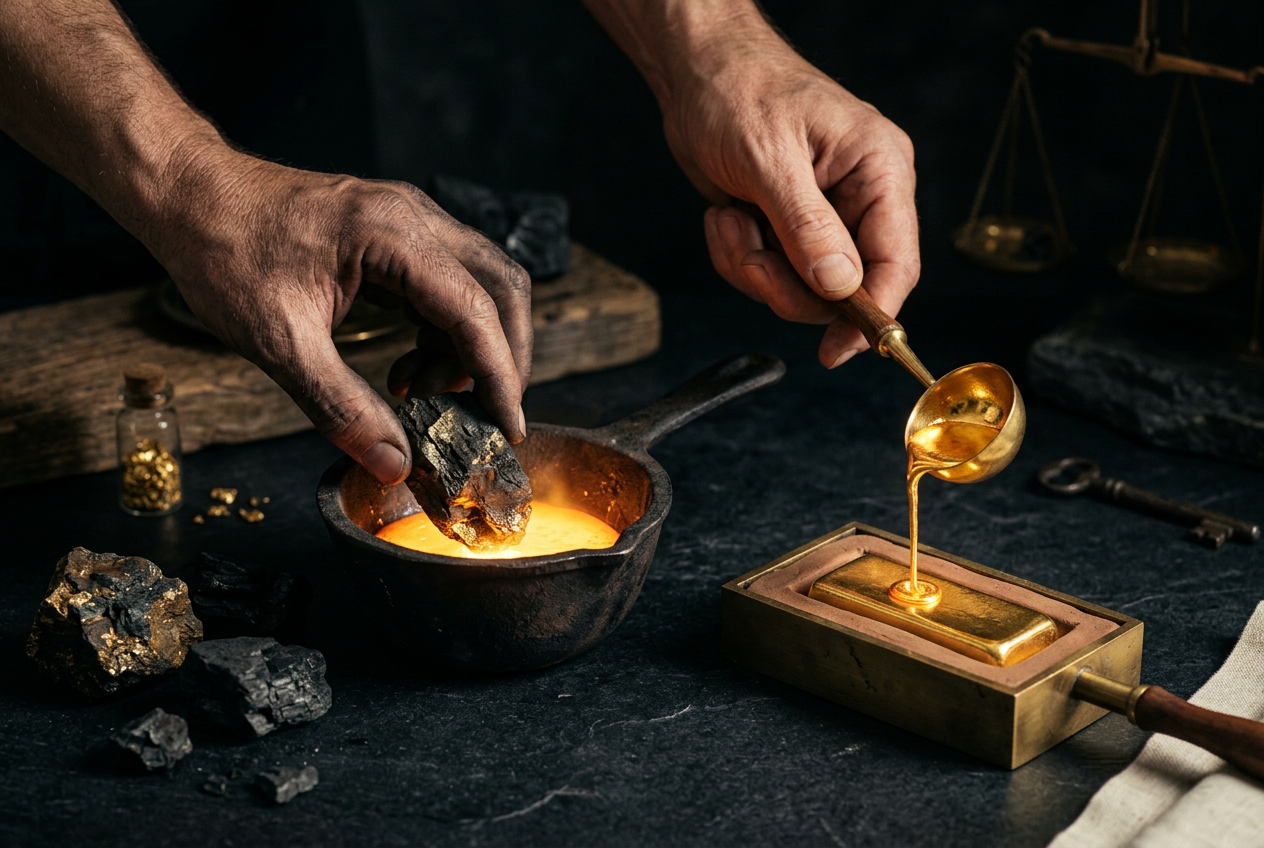
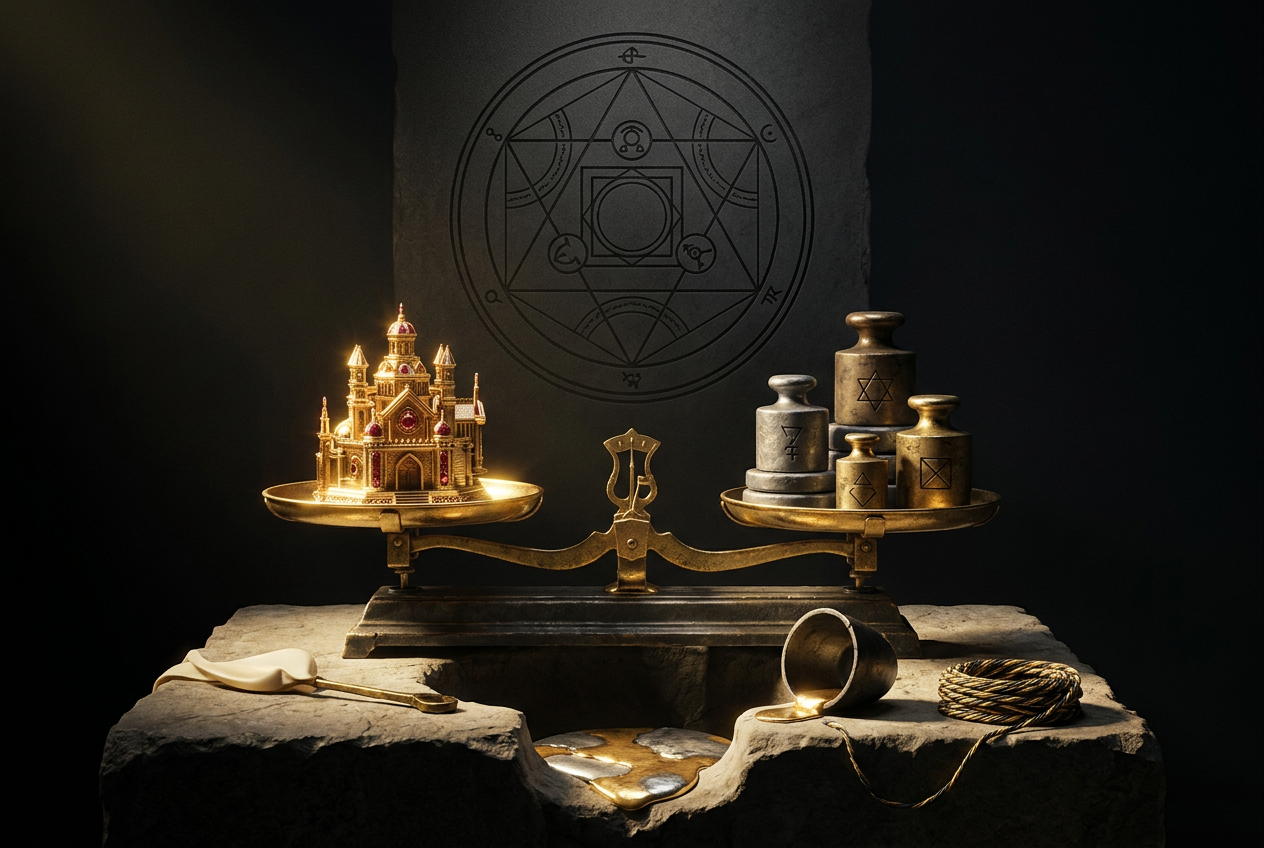
What is personal alchemy? At its core, personal alchemy is the practical process of taking your life's raw, difficult experiences—like failure, heartbreak, or self-doubt—and deliberately reshaping them into personal strength, wisdom, and capability. Unlike ancient chemistry which tried to turn physical lead into gold, personal alchemy is a psychological and behavioral framework. It is the conscious decision to stop viewing yourself as a passive victim of your circumstances and instead start using your challenges as the raw materials to build a stronger character.
If you have ever gone through a devastating breakup, a career setback, or a period of deep self-doubt and emerged on the other side wiser, kinder, and more resilient, you have already practiced personal alchemy. You took an experience that felt heavy and destructive and used it to cultivate a valuable new version of yourself.
Let's break down exactly how this process works, look at three concrete examples of it in action, and explore how you can start practicing it in your everyday life.
The Real Science Behind the Metaphor
When people hear the word "alchemy," they often think of secret laboratories, dusty books, and magicians trying to perform the impossible. But in the context of modern psychology and human development, alchemy is a metaphor. It is about transformation.
We all face "lead" in our lives. Lead represents the heavy, toxic, or uncomfortable parts of our experience. It is the bad boss, the bad habit, the childhood wound, or the sudden loss. If you leave lead alone, it just sits there—heavy and useless.
Personal alchemy is the intentional application of self-awareness, emotional processing, and disciplined action to change the form of that raw experience. Instead of pretending the bad things didn't happen, you accept that they did, and you ask: How do I use this to become stronger? This is not toxic positivity. It is not about putting a happy face on a tragedy. It is about extracting utility from adversity.
The Core Mindset Shift: From Victim to Chemist
To understand what is personal alchemy, you must first understand the fundamental shift in how you view your life. Most people operate as passive observers. When life gets hard, they ask, "Why is this happening to me?"
An alchemist asks a different question: "What is this teaching me, and how can I use it?"
This shift requires you to step out of your comfort zone. Often, we hold onto our pain because it defines us. We get comfortable in our suffering. In fact, understanding why familiar pain feels safer than change is one of the first major hurdles you must overcome. It is easier to complain about the lead than it is to build the fire hot enough to melt it down.
When you stop seeing your pain as a life sentence and start seeing it as raw material, your relationship with adversity changes completely. You realize that your worst days are actually your most valuable assets, provided you are willing to do the work to process them.
Example 1: Turning Professional Failure Into Career Clarity
Let’s look at how this works in real life. Imagine a professional named Sarah. Sarah spent five years climbing the ladder at a marketing agency, only to be unexpectedly laid off during a restructuring.
The "lead" in Sarah's situation is obvious: rejection, financial panic, loss of identity, and embarrassment.
A non-alchemical response would be to slip into despair, blame the company, take a low-paying job out of fear, and carry bitterness into her next role.
Here is how Sarah applies personal alchemy:
- The Fire: She allows herself to feel the anger and fear, but she does not let it consume her behavior.
- The Separation: She looks at her five years objectively. She realizes she was actually burning out and didn't even like the agency's toxic culture.
- The Transformation: She uses her severance time to study freelance consulting. She takes her deep knowledge of agency systems—the very systems that exhausted her—and packages them into a high-value consulting service for small businesses.
Sarah turned her sudden unemployment into the catalyst for her own successful business. The "lead" of being laid off was transformed into the "gold" of career autonomy and self-reliance.
Example 2: Transforming Social Anxiety Into High-Value Listening
Now let’s look at a personal, internal example. Marcus has struggled with severe social anxiety his entire life. When he enters a crowded room, his heart races, and his mind goes blank.
The "lead" here is isolation, fear of judgment, and a feeling of inadequacy.
If Marcus does nothing, his anxiety will shrink his world. He will stay home, avoid opportunities, and feel lonely.
Here is how Marcus practices personal alchemy:
- The Fire: Marcus accepts that his nervous system is highly sensitive. Instead of fighting it, he embraces it as his baseline.
- The Separation: He learns how to stop negative self-talk so he can calm his mind before entering social situations. He realizes his anxiety makes him hyper-aware of other people's micro-expressions and energy.
- The Transformation: Instead of trying to be the loudest storyteller in the room, Marcus decides to become an elite listener. He uses his hyper-awareness to observe when someone feels left out, steps over to them, and asks thoughtful, open-ended questions.
Because most people love to talk about themselves, Marcus quickly becomes known as an incredibly warm, charismatic, and comforting person to be around. He turned his painful social anxiety into a profound capacity for deep empathy and connection.
Example 3: Converting Financial Mistakes Into Wealth Discipline
Our third example involves money. Think of David, who woke up in his late twenties with thousands of dollars in credit card debt. He spent years buying things he couldn't afford to impress people he didn't like.
The "lead" is the crushing weight of debt, shame, and constant calls from collectors.
Instead of hiding his bills in a drawer, David decides to practice personal alchemy.
- The Fire: He sits down and looks at the exact numbers. He feels the intense shame of his choices without running away from it.
- The Separation: He identifies the emotional void he was trying to fill with spending—primarily a need for validation.
- The Transformation: David builds a strict budget, takes on a side hustle, and learns the fundamentals of personal finance. Over two years of disciplined sacrifice, he pays off his debt.
But the transformation doesn't stop there. The discipline David developed to climb out of debt becomes his greatest asset. He continues his frugal, intentional habits, but now he channels that money into investments. Five years later, he is not just debt-free; he is building real wealth. His past financial ignorance was the exact fuel he needed to cultivate high-level financial literacy.
How to Practice Personal Alchemy: A 4-Step Process
Now that you have seen what personal alchemy looks like in action, how do you apply it to your own life? It is not an overnight miracle. It is a systematic practice of emotional and psychological refinement.
Here is a simple, actionable blueprint you can use the next time you face a difficult situation:
- Acknowledge and Accept the Raw Material: Do not pretend a bad situation is good. Name the emotion. If you are angry, be angry. If you feel defeated, acknowledge it. You cannot transform what you refuse to look at.
- Neutralize the Emotional Charge: Give yourself time to cool down. When we are highly emotional, our brains are in survival mode. You cannot think strategically when you are fighting for emotional survival.
- Perform an Honest Post-Mortem: Ask yourself objective questions. What part of this situation did I control? What was completely out of my control? What does this pain tell me about my boundaries, my values, or my weaknesses?
- Take Direct, Constructive Action: Design an action plan based on what you learned. If a relationship failed because you lacked boundaries, start practicing setting boundaries in small, daily ways. Turn the theory of your lessons into the muscle memory of your habits.
"The obstacle is not blocking the path; the obstacle is the raw material out of which you must build your path."
This active transformation process is what moves you from feeling powerless to realizing you have total agency over who you are becoming.
The Direct Path to Self-Mastery
Ultimately, learning what is personal alchemy is about reclaiming your personal power. It is the practical foundation of self-mastery. When you realize that no experience is wasted—that every setback is simply raw material waiting to be processed—you stop fearing life.
You begin to understand what is self-mastery and how to navigate the inevitable storms of life with a sense of calm confidence. You no longer need external circumstances to be perfect for you to feel secure. Your security comes from knowing that whatever life throws at you, you have the internal tools to melt it down and forge it into something useful.
In her book, The Alchemized Principles of Power, Brittany Johnson highlights this exact principle: power is not something you grab from the outside world; it is something you refine from within by facing your deepest challenges head-on. By embracing this philosophy, you turn your life from a series of random events into a deliberate, beautiful masterpiece of your own making.
Frequently Asked Questions
Is personal alchemy related to magic, spirituality, or the occult?
No. While historical alchemy was rooted in early chemistry and mysticism, modern personal alchemy is entirely psychological and behavioral. It is a metaphorical framework used to explain emotional resilience, cognitive reframing, and habit modification.
How is personal alchemy different from simple coping mechanisms?
Coping is about survival and returning to a baseline after a trauma or setback. Personal alchemy goes a step further: it is about growth and transformation. It doesn't just help you survive the storm; it uses the storm to build a stronger ship.
Can you practice personal alchemy on past trauma, or only current events?
You can practice it on any experience, past or present. In fact, some of the most powerful personal alchemy happens when you re-examine childhood wounds or past failures with adult maturity and extract lessons that you can use to protect and empower yourself today.
What is the hardest part of practicing personal alchemy?
The hardest part is taking complete radical responsibility for your reaction to life. It is very comforting to remain a victim because victims do not have to do the hard work of changing. Letting go of that comfort is the ultimate challenge of the alchemist.
The principle behind this
How to Transmute Difficult Experiences Into Personal PowerDifficult experience is raw material. Left alone it hardens into a story. Examined deliberately, it becomes discernment, standards, strategy, and skill.