Alchemy
Spiritual Alchemy: The Grounded Guide to Real Inner Work
How the ancient art of transformation maps onto modern psychology to help you rebuild your mindset and reactions.
7 min read
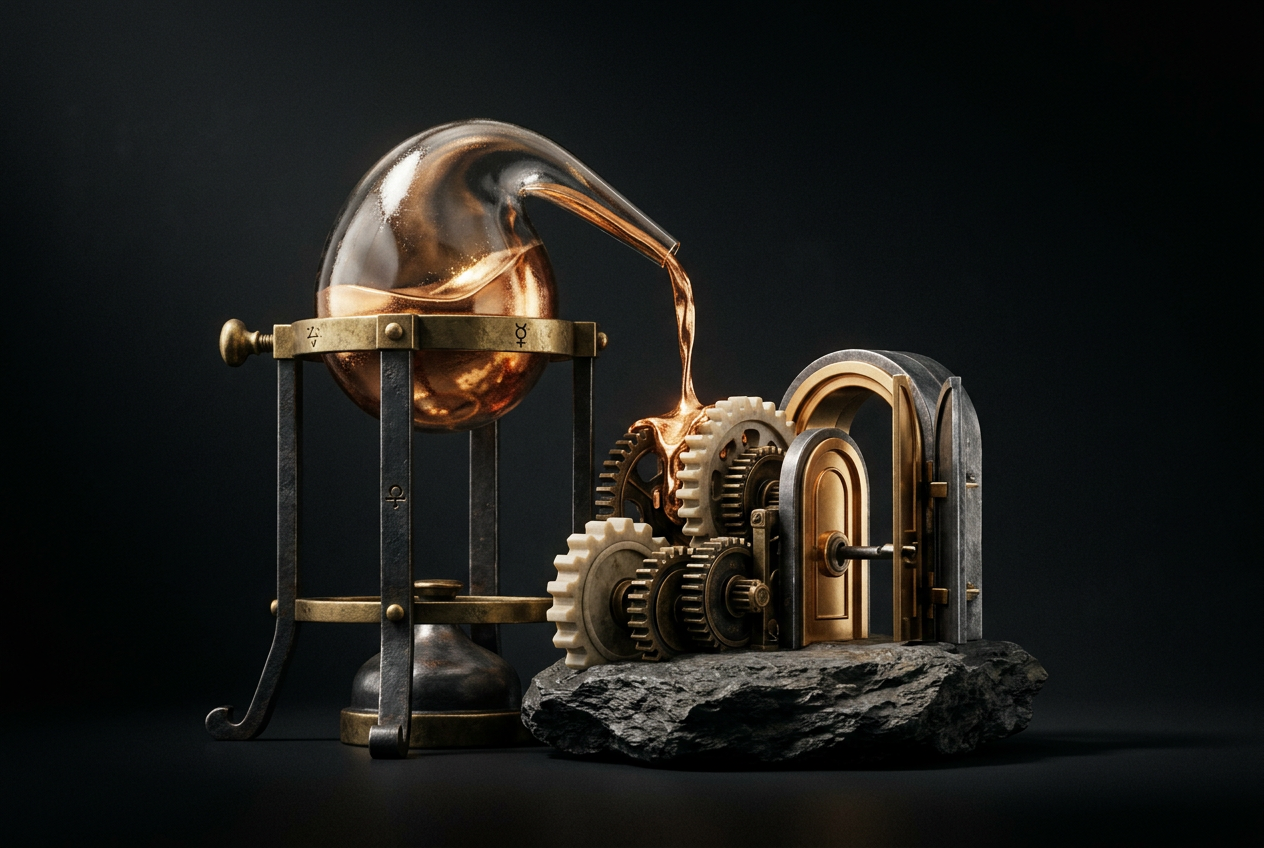
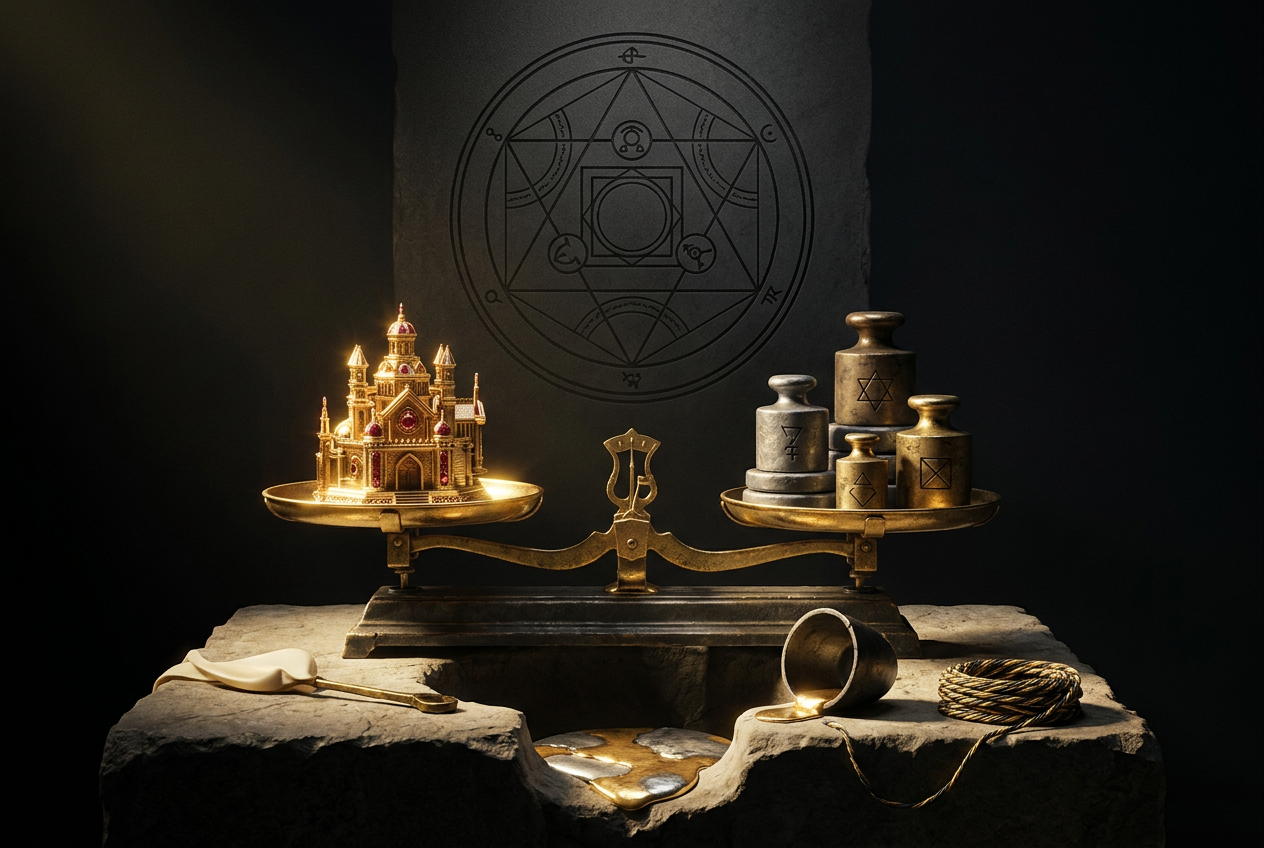
Spiritual alchemy is the practical process of self-transformation, where you consciously change your default reactions, limiting beliefs, and emotional patterns into useful personal strength. While ancient alchemists spoke of turning lead into gold, they were actually using chemical processes as a metaphor for the human mind. Today, we understand spiritual alchemy not as magic, but as deep psychological work.
It is the active practice of observing your internal "lead"—such as fear, shame, or anger—and systematically reshaping it into the "gold" of self-awareness, resilience, and conscious choice. By examining your inner world, you can intentionally direct your life instead of running on autopilot. If you want to understand this process deeply, it helps to look at What Does Alchemy Actually Mean? The Practical Guide to Personal Change to see how these ancient metaphors apply to daily life.
The Real History: From Metallurgy to Mindset
To understand spiritual alchemy, we have to look past the popular image of wizards heating up bubbling cauldrons in dark rooms. The historical alchemists were early scientists, but they were also philosophers. They realized that the physical laws of nature—heating, cooling, breaking down, and purifying—matched the natural struggles of human growth.
In the twentieth century, psychiatrist Carl Jung spent decades studying old alchemical texts. He discovered that the stages of purifying metal perfectly described the process of psychological integration. Jung realized that when we try to bury our flaws or ignore our past, they do not disappear. Instead, they control us from the shadows of our subconscious.
Spiritual alchemy is the act of bringing those hidden parts into the light. By facing our discomfort, we can break down old patterns and rebuild ourselves into something stronger. It is not about pretending we have no flaws; it is about learning how to use our raw materials to build a better life.
The Psychological Stages of Inner Transformation
The old texts broke the alchemical process down into distinct stages. When we look at these stages through a modern psychological lens, we find a practical roadmap for personal growth.
1. Calcination (The Fire of Awareness)
Calcination is the process of heating a substance to ash. Psychologically, this is the painful moment when our old coping mechanisms stop working. It is the ego-crushing realization that the way we have been living is no longer serving us. This stage burns away our false pretenses and forces us to look at our raw reality.
2. Dissolution (Feeling the Uncomfortable Emotions)
Once the fire turns things to ash, dissolution washes them in water. In your mind, this is where you stop running from your feelings and finally let yourself feel them. It is the grief, the sadness, or the fear that we usually try to distract ourselves from. Allowing these feelings to surface without reacting to them is what thaws our frozen emotional patterns.
3. Separation (Sorting the Truth from the Lies)
Separation is about filtering. It means stepping back and sorting out your genuine thoughts from the stories you were told to believe. During this phase, you separate who you actually are from who you thought you had to be to please others. You learn How to Spot and Release Limiting Beliefs You Did Not Choose so you can start working with clean, honest materials.
4. Conjunction (Uniting Your Divided Self)
This is where you bring the separated pieces back together in a healthy way. Conjunction is the marriage of your analytical mind and your emotional self. Instead of fighting your sensitive side or ignoring your logical brain, you allow them to work together. You accept both your strengths and your weaknesses as part of one complete picture.
True transformation does not occur by destroying your past, but by using its raw materials to forge your future.
Mapping the Metaphor to Modern Behavior
Let us look at a concrete, everyday example of how this works in real life.
Imagine you are passed over for a promotion at work. Your default reaction is a mix of hot anger and cold dread. Your mind starts spinning a story: "I am not good enough, and my boss hates me." This is your raw "lead."
If you let this reaction run on autopilot, you might withdraw, do poor work, or pick a fight with a colleague. You are letting the heavy lead weigh you down.
Applying spiritual alchemy means changing your relationship to this moment:
- You feel the heat: You acknowledge the sting of rejection without numbing it (Calcination and Dissolution).
- You separate the facts: You step back and separate the truth from the dramatic story. The truth is you did not get this promotion. The lie is that you are fundamentally worthless (Separation).
- You combine your resources: You pair your emotional disappointment with your analytical drive to ask for constructive feedback (Conjunction).
Through this process, you turn a painful setback into fuel for career growth. This is the essence of Modern Alchemy: How to Turn Your Hardest Moments into Usable Power—taking the cold weight of disappointment and turning it into heat that drives you forward.
Why True Change Requires "Shadow Work"
You cannot transform what you refuse to look at. In modern psychology, the "shadow" consists of all the parts of ourselves we have rejected, denied, or hidden away because we deemed them unacceptable.
If you were scolded as a child for speaking up, your assertiveness might be hidden in your shadow. If you were told that crying is a sign of weakness, your vulnerability is in your shadow.
Spiritual alchemy requires us to go into the dark basement of our own minds. When we reclaim those hidden parts, we reclaim our power. A person who has integrated their shadow is not easily shaken because they already know their own weaknesses, their own anger, and their own capacity for mistakes. They do not have to waste energy pretending to be perfect.
In her book, The Alchemized Principles of Power, Brittany Johnson points out that true personal power does not come from performing a polished version of yourself for the world, but from aligning your inner truth with your outer actions. This alignment is only possible when you stop fighting your own history.
A Step-by-Step Practice for Daily Transmutation
To make spiritual alchemy a grounded habit rather than an abstract concept, you can use a simple four-step process whenever you feel triggered, anxious, or stuck.
- Pause and Name the Sensation: When a strong emotion hits, stop. Before you speak or act, name the physical feeling. Is it a tight chest? A hot face? A clenched jaw? This anchors you in your body.
- Separate the Feeling from Your Identity: Say to yourself, "I am feeling anger right now," instead of "I am an angry person." This small linguistic shift creates space between you and the emotion.
- Trace the Root: Ask yourself calmly, "When was the first time I felt this exact sensation?" You will often find that your current reaction is actually an old childhood memory playing on repeat.
- Choose a Value-Driven Response: Decide how you want to act based on your values, not your temporary feelings. Ask yourself, "What would a grounded, self-aware person do in this moment?" Then, take that action.
Transitioning from Self-Work to Daily Systems
It is easy to feel self-aware when you are sitting quietly in a room. The real test of spiritual alchemy happens when life gets messy, busy, and stressful.
To keep your growth from fading, you have to move from occasional self-reflection to consistent daily routines. Building stable habits acts like the container that ancient alchemists used to hold their reactions. Without a strong container, the heat of daily life will simply cause you to boil over.
By designing your environment to support your new mindset, you protect your progress. For a deeper look at how to build these protective structures, explore The Shift to Systems: Advanced Alchemy for Lasting Change. When you change your habits, your transformation becomes automatic rather than exhausting.
Frequently Asked Questions
Is spiritual alchemy a religious practice?
No, spiritual alchemy is not a religion. It is a psychological framework and a philosophy of personal growth that uses historical metaphors to help people understand how to change their minds, heal from past experiences, and build emotional resilience.
How is this different from positive thinking?
Positive thinking often asks you to ignore, bypass, or suppress negative emotions in favor of a cheerful attitude. Spiritual alchemy does the opposite; it requires you to look directly at your pain, fear, and flaws so you can digest and transform them into real strength.
How long does it take to see results from this inner work?
While you can experience immediate relief by pausing during a stressful moment, deep psychological transformation is a lifelong process. You will notice gradual shifts in your default reactions, relationships, and confidence over several weeks of consistent practice.
Do I need any special tools to start?
You do not need any special equipment to practice spiritual alchemy. The only tools required are your own awareness, a willingness to be honest with yourself, and a journal or notepad to write down your thoughts and patterns as you observe them.